

Script is one of the most popular tattoo styles in the world. To be able to tattoo it, you need precise linework and the ability to shade in very small areas.
While the only way to perfect the skills you need to do good script tattoos is to practice on fake skins, there are a few tips and tricks that will help you improve faster.

In this article, we’ll be breaking down:
Tattooing Script
Script requires you to be very precise. Below, you’ll find a few things to keep in mind while working on a client’s script tattoo:
1
Let Your Stencil Dry Completely
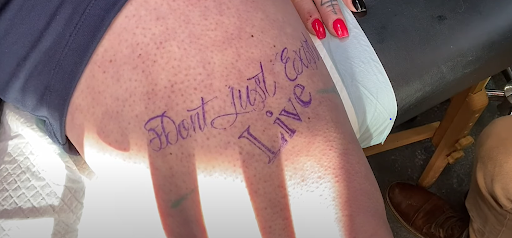
When working with script, you want to make sure that you are letting the stencil dry for as long as possible (15 minutes is a good benchmark). If you let it dry completely, you won’t have issues with your stencil rubbing everywhere.
2
Stretch the Skin Properly
Stretching the skin correctly is important, especially when you’re going in with really thin lines (like the 7 round liner used in the video). Propping your stretching hand up will also make sure you have more stability, which is key to making sure your lines don’t come out shaky.
3
Do the Outline First
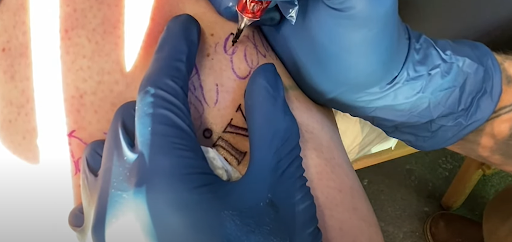
It can be tempting to fill in the lettering as you go, but it’s important that you stay focused on your linework and get that done first.
Because any small inconsistency will be easy to see, you want to be as close to perfect as possible with your linework.4
Float the Needle
For linework, we recommend “floating the needle.” This means you use a longer stroke and leave a small gap between the skin and the tube. (You will have to manually control your depth).
Floating the needle lets you see exactly where your needle is going into the skin.
Riding the tube (pressing the tube right up against the skin) makes it harder to see where you’re going. It can also spew ink on your stencil, making it even more difficult to tell what you’re doing.
5
Use the Same Needle for Different Line Weights
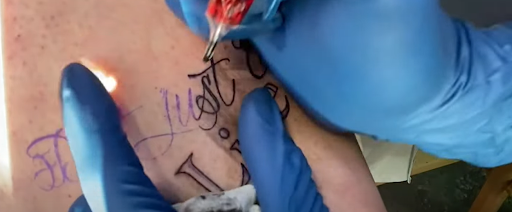
In script, there are usually both thin and thick lines. To get this effect, some people like to use really thick liners. However, using a thin liner looks better for script.
Instead of using a thick liner, use your thin liner to double line everything and then fill it in later.
6
Push Your Needles
It can be easier to see what you’re doing if you “push” the needle in at an angle instead of “pulling” back.
7
Fill in Your Shading
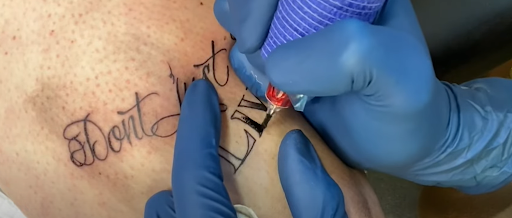
You can fill in your shading a few different ways:
Liner
You can use a liner and lightly go into the skin. It will almost feel like you’re barely brushing the skin, and you won’t work that area for a long time. If you do, you could overwork the skin, causing it to scab up - or the ink could fall out completely.
Because it’s very easy to overwork the skin this way, this technique is not recommended for newer artists.
Mag
When it comes to using mags in a really tiny area, you can turn them a bit to the side. The problem with this is that it could really slice up the skin unless you know what you're doing. We recommend trying this method on fake skin first.
Round Shader
If you're using a round shader, just do little circles filling in that area. Try your best not to stay in one area too long, or it'll overwork the skin.
8
Whip Shading Method
If you don’t want to completely fill in an area, you can use a whip shading to get a stipple shading effect.
Become a Tattoo Artist With the Artist Accelerator Program
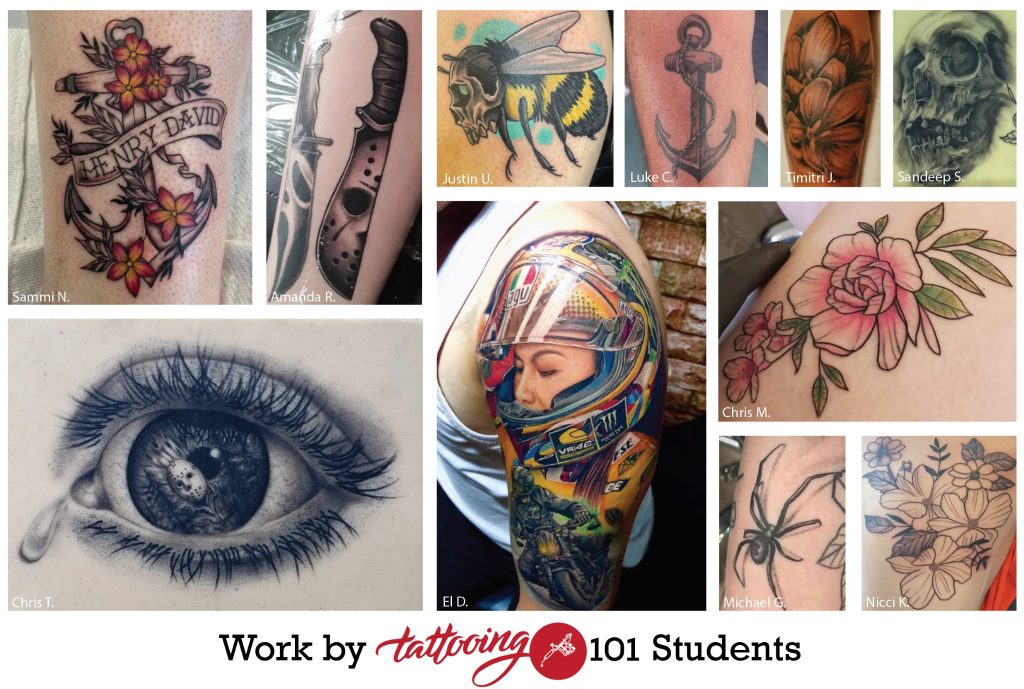
Having a career in tattooing is not only fulfilling, but it’s also the most stable way to make a living as an artist. However, for decades, the process to become a tattoo artist has been notoriously difficult.
The apprenticeship process requires aspiring tattoo artists to work 50-60 hours a week without pay for 2-4 years. That, combined with the toxic culture of abusing apprentices, makes getting into the industry almost impossible for newcomers.
That’s why we created the Artist Accelerator Program. Our online course provides a simple, structured way of learning to tattoo that has been proven to work by over 2500 successful students, with many of them having gone on to open their own shops all around the world.
Inside the program, we’ll take you through every step of the tattooing process in 9 clear, easy-to-follow modules and support you along the way within the Tattooing 101 Mastermind online community.
In the Mastermind group, you’ll collaborate with other students, get answers to your questions, and receive personalized video feedback on your artwork and tattoos from professional tattoo artists. With this friendly community of both new and experienced tattoo artists, you’ll never be stuck again.
When you join the Artist Accelerator Program, you’ll have instant access to the full course and the Mastermind community, as well as our 30-Day Flash Challenge and recorded interviews with tattoo artists from all over the world.
Click here to learn more about the Artist Accelerator Program.