
Tattoo needles have different sizes so they can perform different jobs. The measure of the diameter (“thickness”) of the needle determines how much ink goes in the skin with each deposit.
For example, bugpins, which have a smaller diameter than standard needles, can be helpful if you’re trying to restrict ink flow to add detail or build up shading.

To help you figure out which type of needles you need, we’ll be breaking down:
Bugpins vs Standard Tattoo Needles
What Measurement is a Bugpin Needle?
Tattoo needles come in three different diameters: 12, 10, and 8.
12 is the standard size, and it is used for most tattoo styles. (This is why it’s called a “Standard.”)
10 is a bit smaller than the standard size, and they are technically called “double zeros.” However, when tattoo artists say “bugpins,” they usually mean a needle with this diameter.
8-gauge needles are the smallest option. These are actually bugpin needles (they’re called bugpins because they are used to pin dead bugs in place for display). However, tattoo artists rarely use these.
So, when a tattoo artist says they’re using a “bugpin,” they could be referring to either an 8-gauge or a 10-gauge needle, but 95% of the time, they mean a 10-gauge needle.How to Order Bugpins
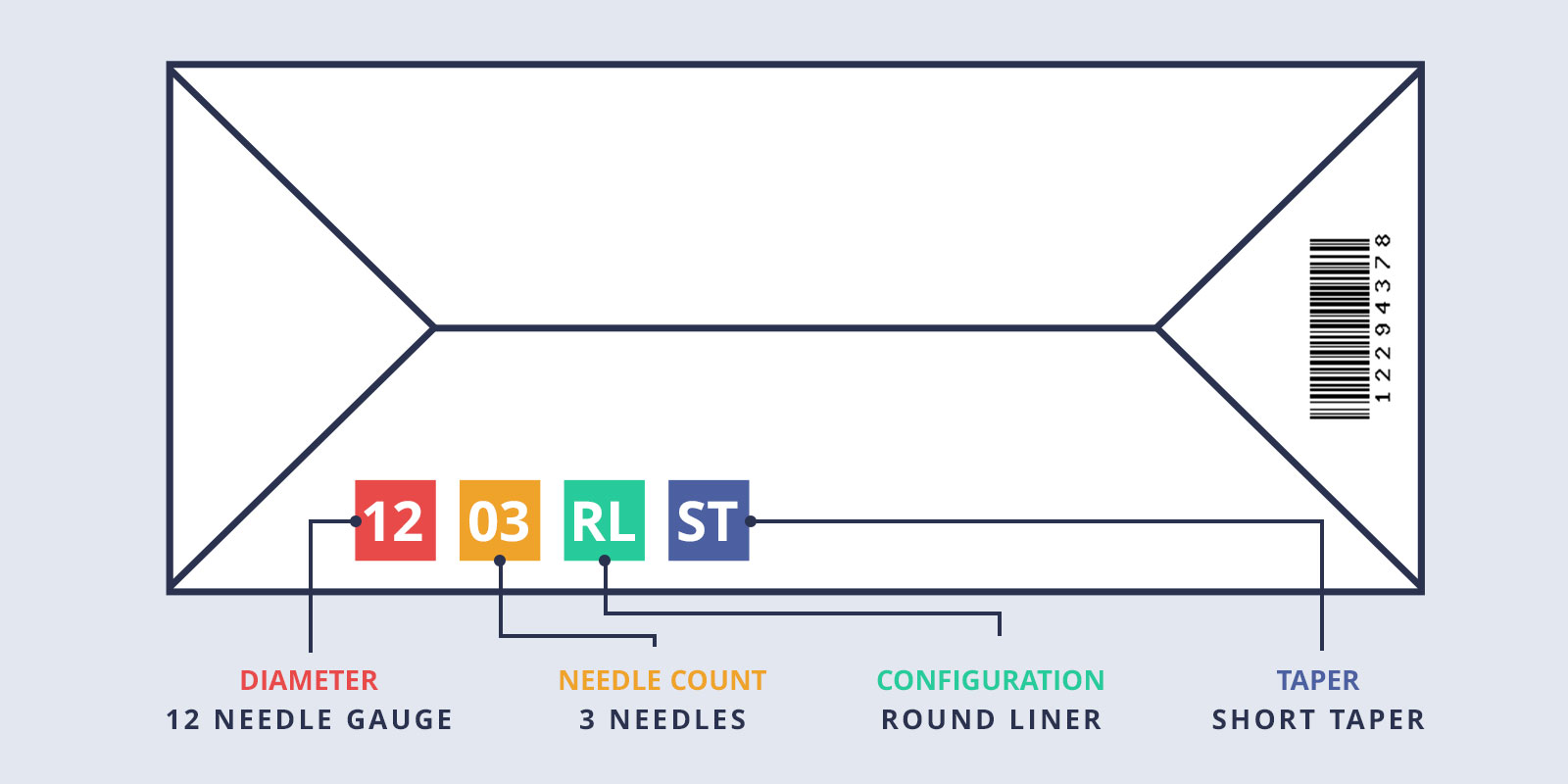
All needle boxes have a code on them made of numbers and letters.
The first number in the code is the gauge. So, if you see a code that starts with 12 (1207RL), then it’s a standard needle. If the code starts with 10 (1007RL), then it’s a bugpin needle.Size Difference between Bugpins and Standards
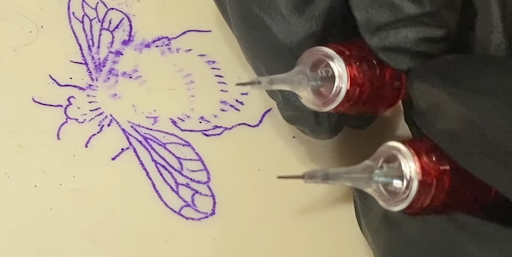
Bugpins are thinner, which means they will show up smaller in the skin than a standard needle. Anytime you use a bugpin, you can think of it as a two-needle difference from the “standard” diameter.
So, if you’re using a 1007RL (bugpin 7 round liner), it will look like a 1205RL (standard 5 round liner).Note:
There are some cartridge brands that will put the “standard” size on the individual cartridges. So you might buy a box of 1007RL, but there will be a “5” listed on the individual cartridges. They do this in case you are using both standards and bugpins in a tattoo and lose track of which needle is a bugpin. This way, you can rely on the “standard” sizes.
How Tattooing with Bugpins is Different
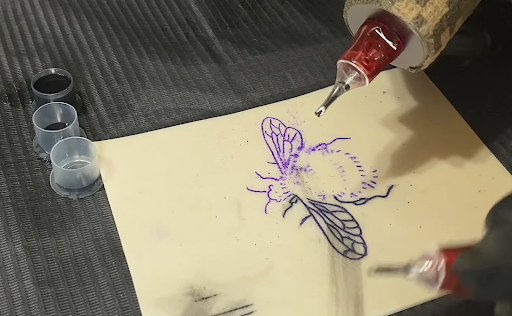
When you’re tattooing with bugpins, you have to be extra careful about causing damage to the skin.
Because they allow you to have more needles in a smaller area, it’s easy to accidentally slice up the skin. However, they will create a crisper and clearer line, which is important if you’re working with super tiny details like eyelashes.
Additionally, any shakes in your lines will be more visible with a bugpin because the linework is thinner.We recommend turning your voltage down when switching from a standard to a bugpin needle to avoid extra trauma to the skin.
For example, an artist might run their machine at 8.5v for lining with a standard. They would drop their voltage to ~7v for a bugpin. Your hand speed should remain the same or slow down slightly. When using bugpins, keep your pressure light and don’t stay in one area too long.When to Use Bugpins
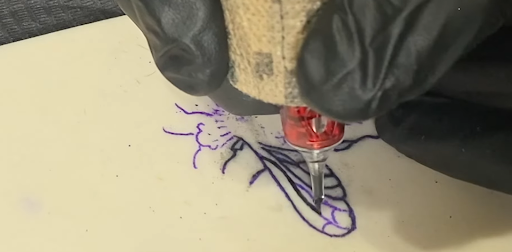
We recommend using bugpin needles for tattoos that require a lot of detail and building up your shades. For example, realism, some black and gray, and “dainty” tattoos will work best with bugpin needles.
However, you would not use bugpins for a style like American Traditional, which requires thick lines and heavy color saturation. This applies to Neotraditional, New School, Tribal, etc.Understanding Tattoo Needle Sizes
Diameter is just the beginning of understanding tattoo needles. You also need to understand needle count, configuration, and taper.
Needle Count
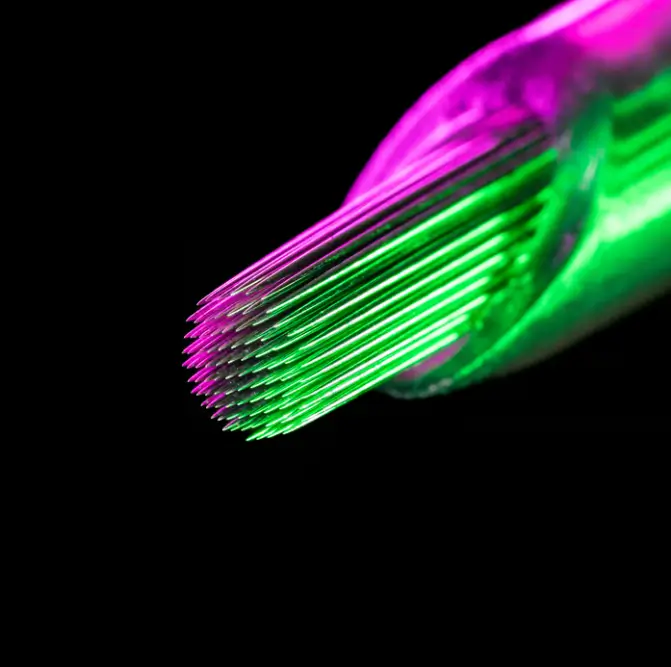
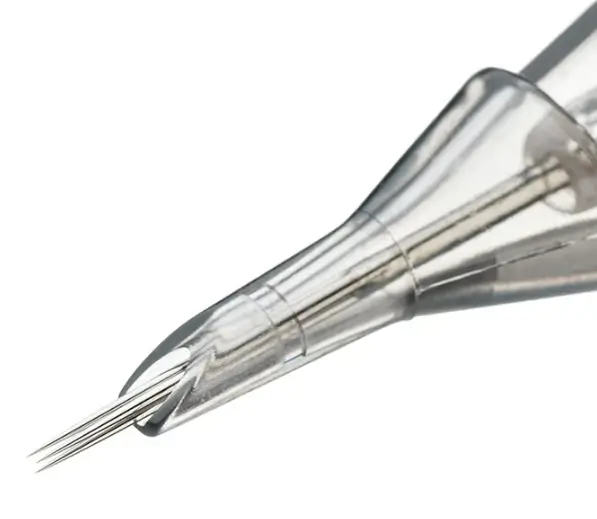
Needle count just refers to how many needles are soldered to the needle bar. For example, a “5 Liner” has 5 needles. A “15 Magnum” has 15 needles.
Needle Configuration
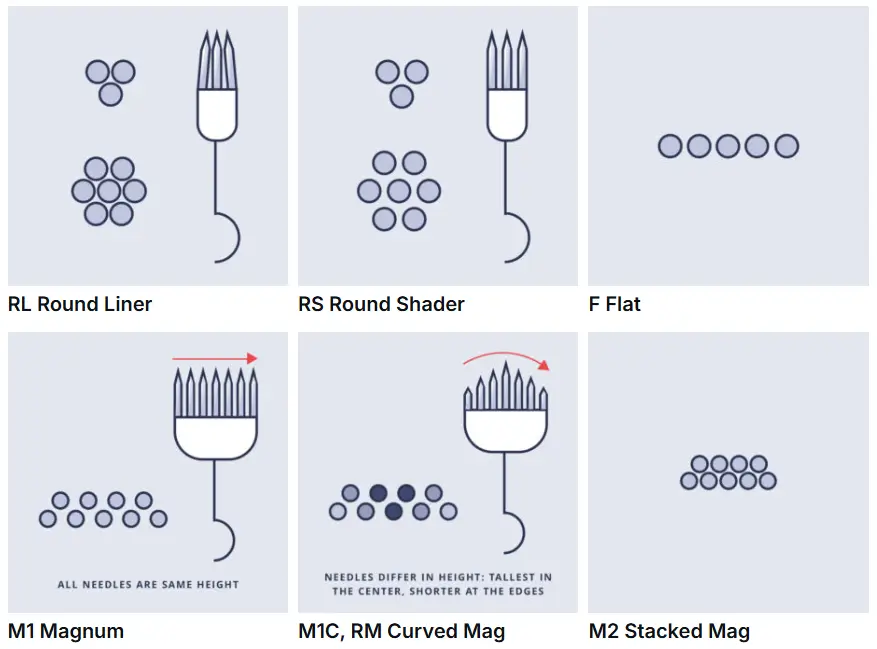
Outside of the diameter, the overall needle configurations, also called a “needle grouping” refers to the shape of the needle. Picking the right tattoo needles for you begins with understanding which sizes will work best for you.
Each of these configurations can be composed of standard or bugpin needles.Magnum needles have a long and flat shape, making them good for covering a lot of space in a shorter amount of time. A small magnum needle might have 5-7 individual needles. Our artists recommend practicing with a 13 or 15 magnum, since they cover a lot of space without becoming too large to maneuver easily.
Standard vs. Bugpin Magnum Needle
When you go to buy needles, keep in mind what you need the needles to do. For example, if you’re going to do a lot of color blending, you’d want to use standards. They put a lot of ink in the skin quickly. If you plan to do intricate work and layer your shading, bugpins are the better option because they cause less trauma to the skin.
Straight vs. Curved Magnum Needle
“Straight” mags use the same length needles all away across. Curved mags have shorter needles at either edge, making it easier to create a “feathered” edge.
In the tattoo community, you’ll find fans of both styles. However, it’s easier to cause more trauma to the skin with a straight mag, which is why we recommend curved magnums.
Instead of having the pins lined up, a round shader needle has them soldered onto the needle bar in a circle. This can make it easier to add shading into tight areas.
Round liners have the same configuration as round shaders, but the needles are “pinched in” together at the end to give you more control and to create really crisp linework.
Standard vs Bugpin Liner
Standard liners are best for Traditional work, but bugpin lines can give you more precision. A general rule of thumb is that a bugpin liner is one size smaller than the standard. For example, a 7 bugpin liner would be the same size as a 5 standard liner. Because more needles are fitting into a smaller space, it is easier to cause more trauma with the bugpin.
Additionally, bugpin liners make it easier to go too deep in the skin and cause a blowout because there’s much less surface tension for them to break through (so be mindful of that when you’re using them).
Tight Round Liners
“Tight liners” have the individual needles pinched even closer together (and often use a long taper). These are well suited for ultra thin lines like eyelashes.
Hollow Liner
Hollow liners leave out the “middle” needle in a round liner configuration. This is meant to help increase the quality of the ink flow.
Pro Tip:
The needle configuration has nothing to do with whether you’re using cartridge needles or a needle bar. Cartridge needles are the plastic casing you’ll use in a tattoo pen machine. Needle bars are the traditional needles that attach to coil machines using a grommet.
Needle Taper
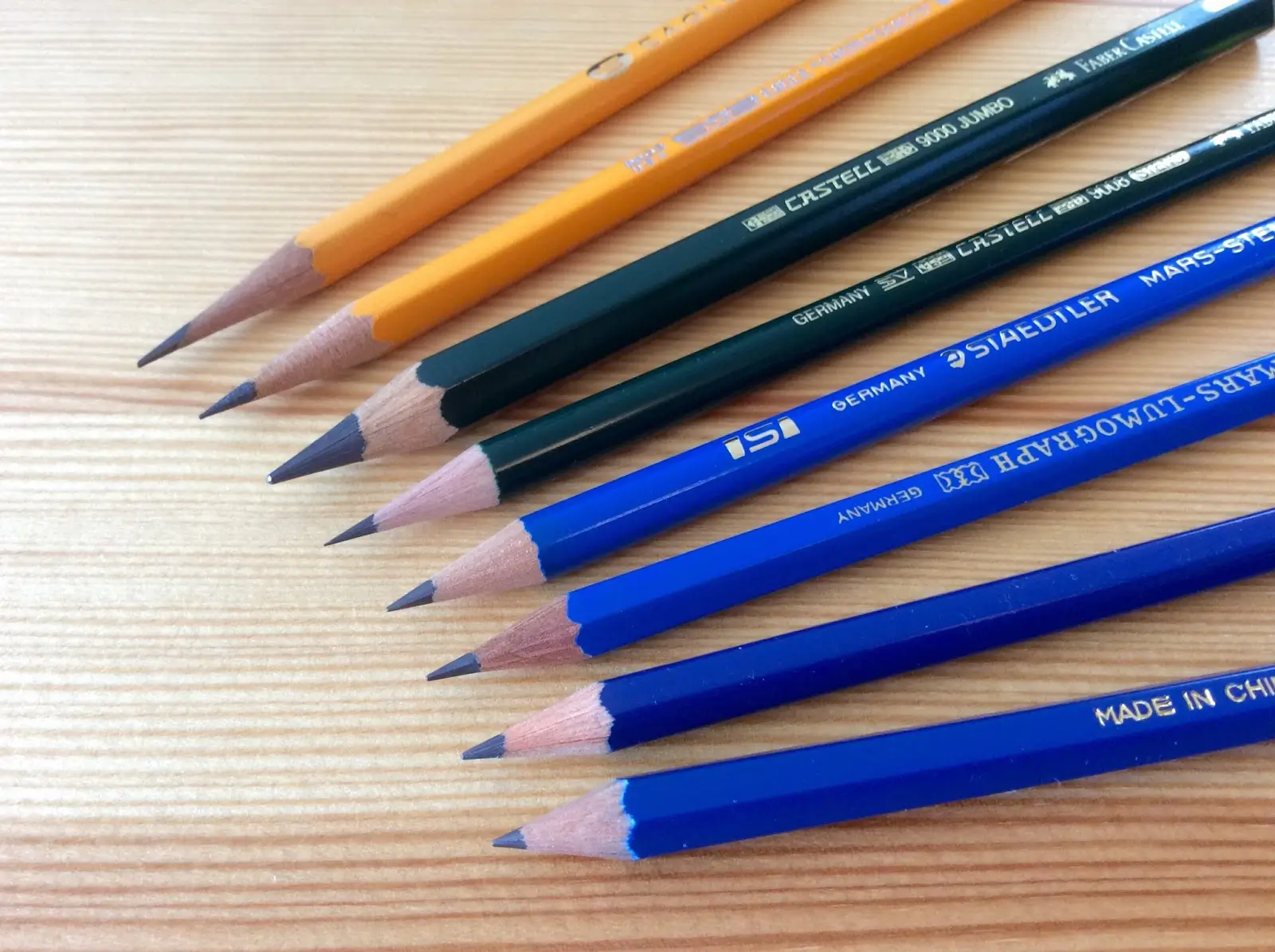
Needle taper refers to how steep the point of the needle is. It’s the measure of distance between the tip of the needle and when it starts to narrow (or “taper”).
Sometimes, it’s easy to think about tattoo needle taper like sharpening a pencil. A short taper needle would be like a pencil where you can barely see the lead, but it’s sharpened to a point. A long taper needle would be like a pencil where you can see lots of the lead and it’s sharpened to a very fine point.
Most of your run-of-the-mill regular needles will use a short taper. They cause the least amount of trauma and pack ink into the skin quickly.
Medium taper needles offer you a little more precision.
Needles with long tapers give you extreme precision. Think back to our pencil example. With a super long taper, it’s easier to see what you’re doing. But it’s also easier to break the lead. While needles don’t normally “break off” like pencil lead would, needles with longer tapers are easier to damage.
On tattoo needle boxes, you might see LT (long taper), SLT (super long taper) or XLT (extra-long taper).Become a Tattoo Artist With the Artist Accelerator Program
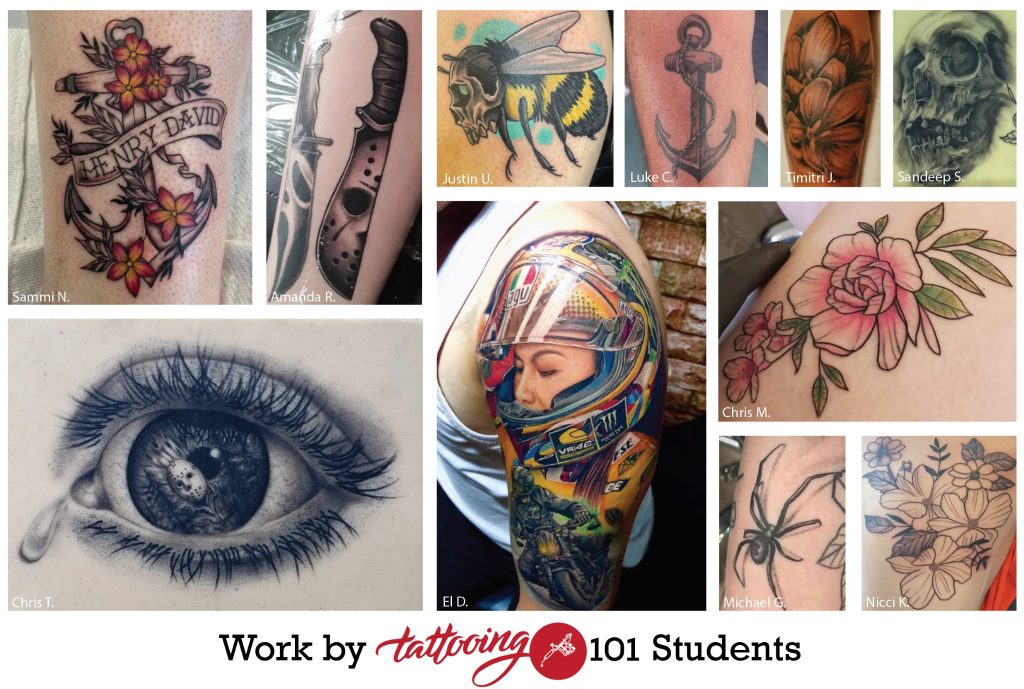
Having a career in tattooing is not only fulfilling, but it’s also the most stable way to make a living as an artist. However, for decades, the process to become a tattoo artist has been notoriously difficult.
The apprenticeship process requires aspiring tattoo artists to work 50-60 hours a week without pay for 2-4 years. That, combined with the toxic culture of abusing apprentices, makes getting into the industry almost impossible for newcomers.
That’s why we created the Artist Accelerator Program. Our online course provides a simple, structured way of learning to tattoo that has been proven to work by over 7000 successful students, with many of them having gone on to open their own shops all around the world.
Inside the program, we’ll take you through every step of the tattooing process in 9 clear, easy-to-follow modules and support you along the way within the Tattooing 101 Mastermind online community.
In the Mastermind group, you’ll collaborate with other students, get answers to your questions, and receive personalized video feedback on your artwork and tattoos from professional tattoo artists. With this friendly community of both new and experienced tattoo artists, you’ll never be stuck again.
When you join the Artist Accelerator Program, you’ll have instant access to the full course and the Mastermind community, as well as our 30-Day Flash Challenge and recorded interviews with tattoo artists from all over the world.
Click here to learn more about the Artist Accelerator Program.