

Tattoo businesses, at their most basic, provide artists with a place to tattoo while receiving a portion of their income as a commission.
With the tattoo industry booming and attracting clients in droves in recent years, now is the perfect time to jump into the industry as a shop owner.
This article will explain how to open a successful tattoo business, step-by-step, including:
Get the condensed checklist here.*
Warning:
We are not lawyers or financial advisors. The information in this article is for entertainment. It is not legal or financial advice.
*Prices listed are based on a tattoo studio located in Tennessee.
Master Tattooing
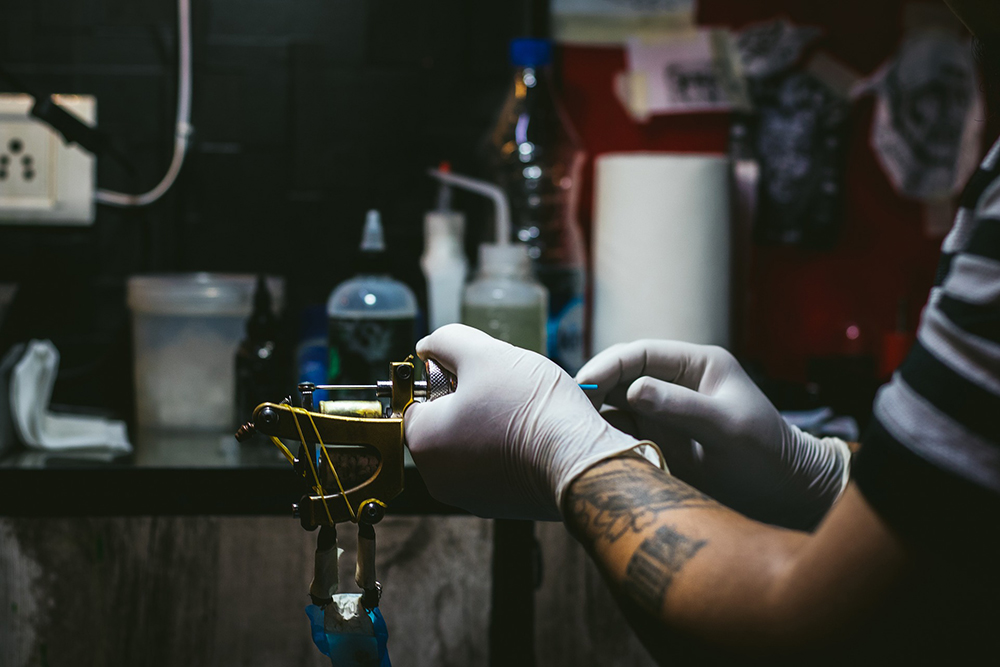
If you’re going to create your own tattoo shop (sometimes called a “tattoo parlor”), you need to be able to tattoo well first so you can build up a client base. It will be incredibly difficult to start your own shop if you don’t already have a client base that is ready to support your shop early on.
If you need help getting started, check out our artist guide on How to Tattoo for Beginners.
Secondly, customers need to feel cared for. While this might not have been the case a few decades ago when tattooing was more underground, nowadays tattooing is more mainstream. And a more mainstream audience is going to look for a place that looks clean and sanitary and promises to treat them well.
This article has been written to reflect building a 6+ artist street shop. However, there is less risk in building a single-artist private studio first because it asks for a lower initial investment. The steps below on how to start a tattoo business (including the shopping list and marketing tactics) can be scaled for a smaller shop before expanding to a larger space with additional artists.
The Marketing Plan: Your Roadmap to Success
It’s a good idea to have a comprehensive business plan. If that’s something you want to create as a business owner, the main goal is to set out your priorities and project business growth. (It’s often something you’ll need to present if you want to receive business loans.) However, what often gets forgotten is a marketing plan.
Your marketing plan is simply the strategies you plan to get clients. Need some suggestions on marketing strategies? Check out this article all about Growing Your Tattoo Business.
Recommendations and personal reviews on Google or Yelp! can really help boost business and get potential clients to trust that your shop does good work.
However, bad reviews can do major damage. Do not ignore them and resolve them as fast as possible with great customer service. If a bad review is disputable (you have proof that the customer never got a tattoo at your business), you might be able to get it removed.
As a new tattoo business, getting the word out about an opening day Flash Event can get a lot of tattoo lovers through the door on Day One. By bringing potential customers to your business location, offering small tattoo art for a low price point, and incentivizing them to book in again for a larger piece, you’re setting yourself up for a strong client base from the jump.
The more money on average a client spends at your shop, the more money you can afford to spend on marketing to get new customers. This is a good time to decide whether you plan to be a walk-in shop (read: mostly small flash pieces), a custom-only (read: appointment only for bigger pieces), or a combination of the two, as that will affect your marketing tactics.
Note
It’s easy to expand a tattoo business (and bring in more revenue) by adding related services in-house that you can advertise in addition to tattooing. Adding services like these can help you scale your shop to well over a six-figure business over time:
Check out more details on expansion ideas here.
Find Artists for Your Shop
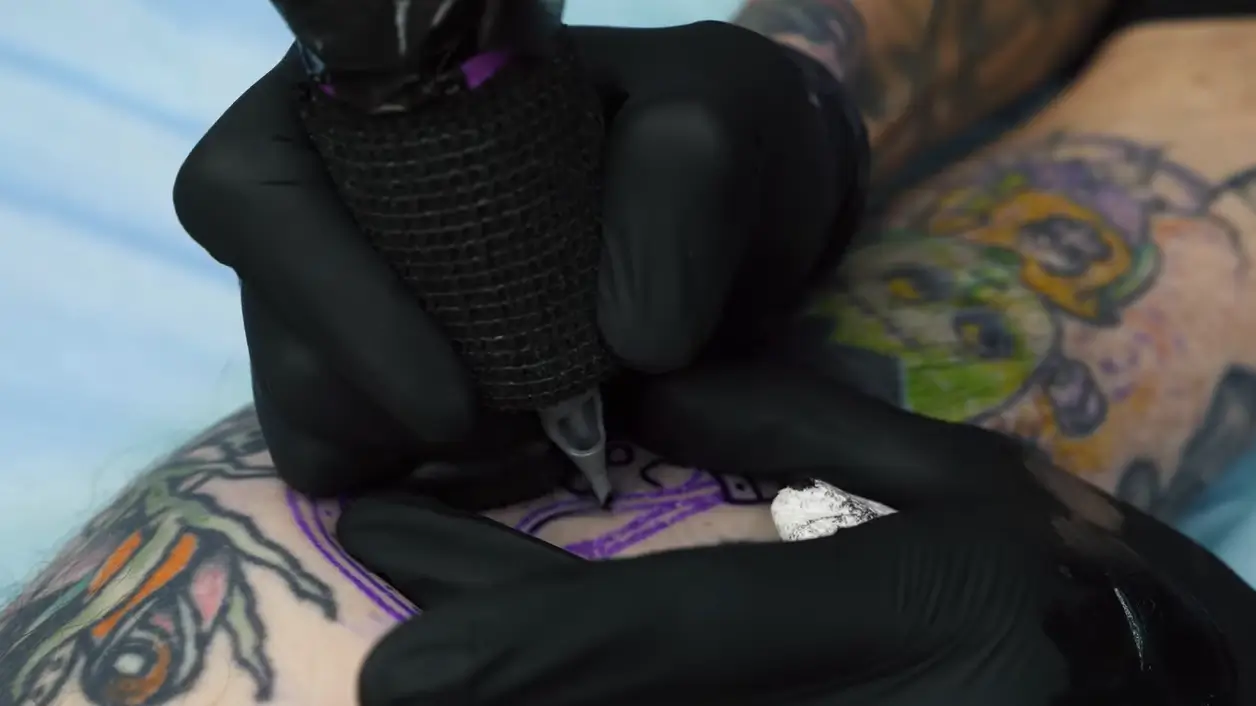
You’ll want to have artists lined up to work before you open a tattoo shop. Otherwise, you’ll be opening a business with no one to bring in clients (or money). This makes opening a shop much riskier. Because even if you do a great job marketing and have a ton of clients...without enough professionally trained tattoo artists to take on all the work, the amount of money you can make is limited by the amount of hours you can work.
While you can strike out alone and be self-employed, the shop will not be making any money unless you are actively working. You can make your tattoo business a bigger financial asset by hiring other artists. This not only gives you financial freedom, it also allows you to work whenever you want and only take on the tattoos you want to do.
Of course, it always helps to be well-connected in the tattoo community. If you hire a tattoo artist that knows other people in the area, they’ll probably pass the word along.
However, you can still attract great artists, even if you don’t have connections.
Make a Name for Yourself First
Build up your own following as a tattoo artist. Once your reputation starts bringing in clients, you have something to offer potential artists in your new shop: guaranteed work.
Note
Having a marketing plan shows that you are organized. This will give artists confidence that you know what you’re doing and that if they join your shop, they won’t need to be looking for another job in a month’s time.
Make an Ad on Instagram that Makes a Better Offer than Competing Tattoo Shops
These days there are more tattoo shops than artists. Finding good talent is hard. Ask yourself: “Why would a tattoo artist work for me instead of any other shop in town?” If you cannot come up with a compelling reason, you will struggle to find artists. The easiest way to attract the best artists is to offer better working conditions than your competitors.
When putting together your ad for your shop, here are some ideas for how you can entice potential artists to work with you.
“When you join my shop, you get:
After you have determined what you can offer an artist, create an ad on Facebook telling them specifically why they should work for you instead of anyone else. If what you have to offer is compelling, artists will come to you.
Facebook Groups
You can network with other artists in Facebook Groups and forums to let let them know you’re hiring. Some examples are:
Manually reaching out on Instagram can be time consuming. Speed up the process by writing a template message and then hire a virtual assistant from Upwork. They can help you message artists in neighboring towns and cities to ask if they’d like to work for you, or if they’d be interested in doing a guest spot.
To run a tattoo business successfully, you need to pick the right artists. The artists you want in your shop are the ones that can pull in customers by creating strong tattoos.
The Must-Haves
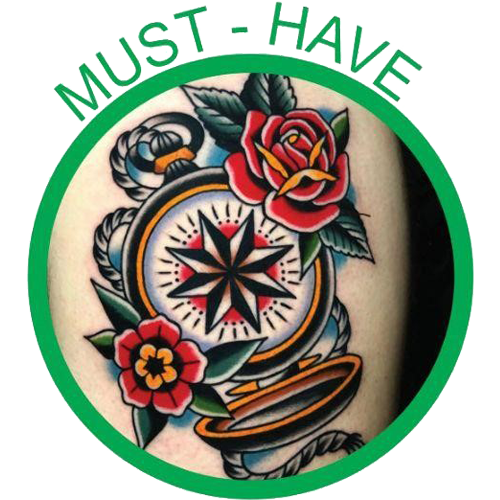
Every artist you hire needs to have the fundamentals down.
They must be able to pull solid lines, pack color, and shade.
A Social Media Following
Artists with large online followings automatically bring clients to the tattoo studios they work at.
You will have to pay them a higher percentage since they are bringing in more business.
If an artist has no following, you can give them a lower split because they will be relying on you to get them work.
Existing Clientele
One of the biggest challenges right after opening your shop will be attracting lots of new customers.
If your artists come with several of their own loyal clients, making money and getting reviews for your shop will be much easier.

Drug, Alcohol, and Drama-Free
Customers want to feel comfortable in your shop. The best way to give them reassurance is to hire quality artists that love what they do and don’t create a toxic work environment.
No matter how great of a tattooer they are, you do not want to deal with an artist that stirs up shop politics or is more interested in partying than tattooing. Eventually, that will reflect back on your shop. Hiring professional tattooists is key!
Cost Estimation
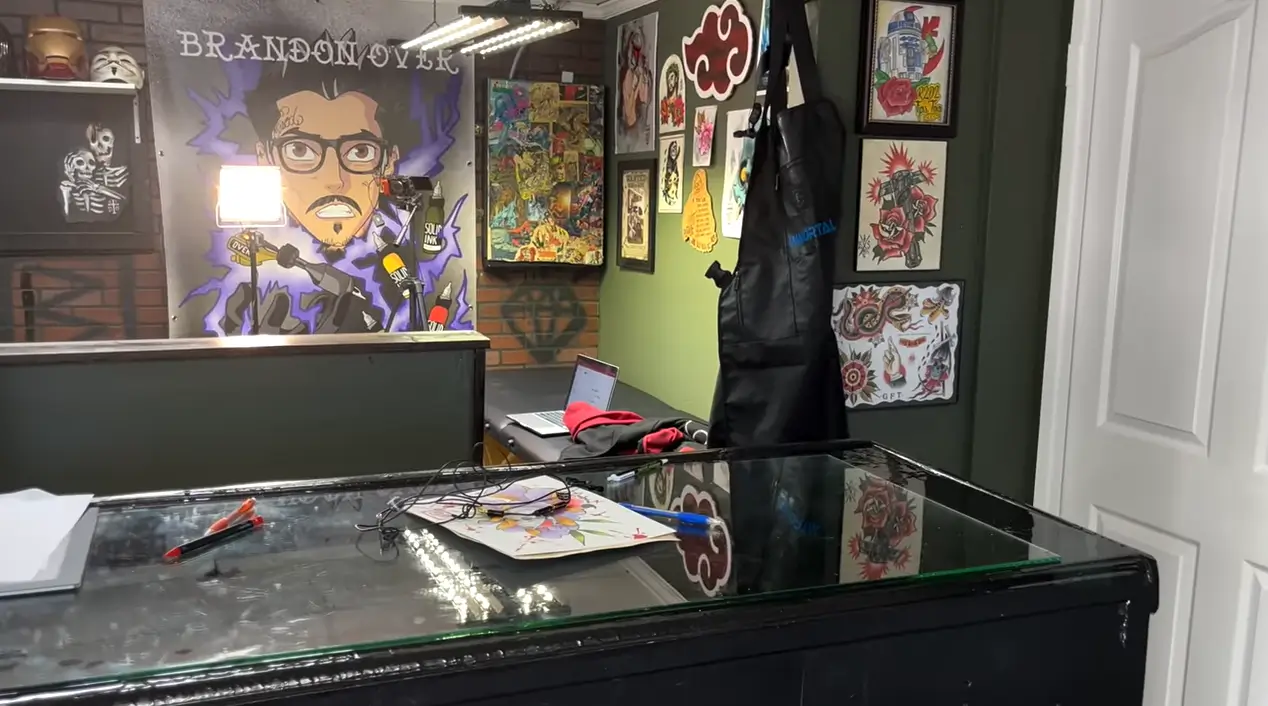
Tattoo shops are unique from other business start-ups because they involve a big up-front investment.
While other small businesses can use cheaper materials or work out of a home when they’re first starting, tattoo shops need to start with high quality tattoo equipment and - in many states - a legally approved space. Knowing that you’re prepared financially to open a well-prepared shop is the first and most important step.
Pick a Name: Make Yourself Easy to Find
When you start a tattoo shop, you want to make sure your business’ name gives an idea of what you do, as well as the personality you want your business to have.
You will need to register your business name:
Register as a Business: Legal Requirements and Taxes
Most small businesses do not need to register with the federal government. However, you will want to register with your state.
Registering as a business provides:
Choose Your Business Structure
You will probably want to register as an LLC (Limited Liability Company). This means the business is owned by only you or by you and a business partner. Filing Limited Liability Companies can cost between $40-$500, depending on your state.
Having an LLC protects your house, car, and personal belongings even if your business goes bankrupt.
After you’ve registered your business name and formed an LLC, you will need to register for taxes by getting both a federal and state tax ID (if you state taxes income).
To register for taxes, you need to apply for an Employer Identification Number (EIN) from the IRS (Internal Revenue Service). You can get an EIN for free through the IRS website. This will let you set up a payroll for any employees you have (like a counter person). Your artists are technically self-employed. They are only paying you a studio fee. They will file their taxes separately with a 1040 form.
If you form an LLC, you can save money by electing S Corporation tax status and getting paid by your own LLC as a salaried employee.
The Business Bank Account: Protect Yourself and Your Business

It’s important to keep your business and personal assets (home, car, etc.) separate. If the shop goes under, you don’t want your home to be taken to pay off debts. Here’s how to protect yourself and set your business up for success:
Find Your Space
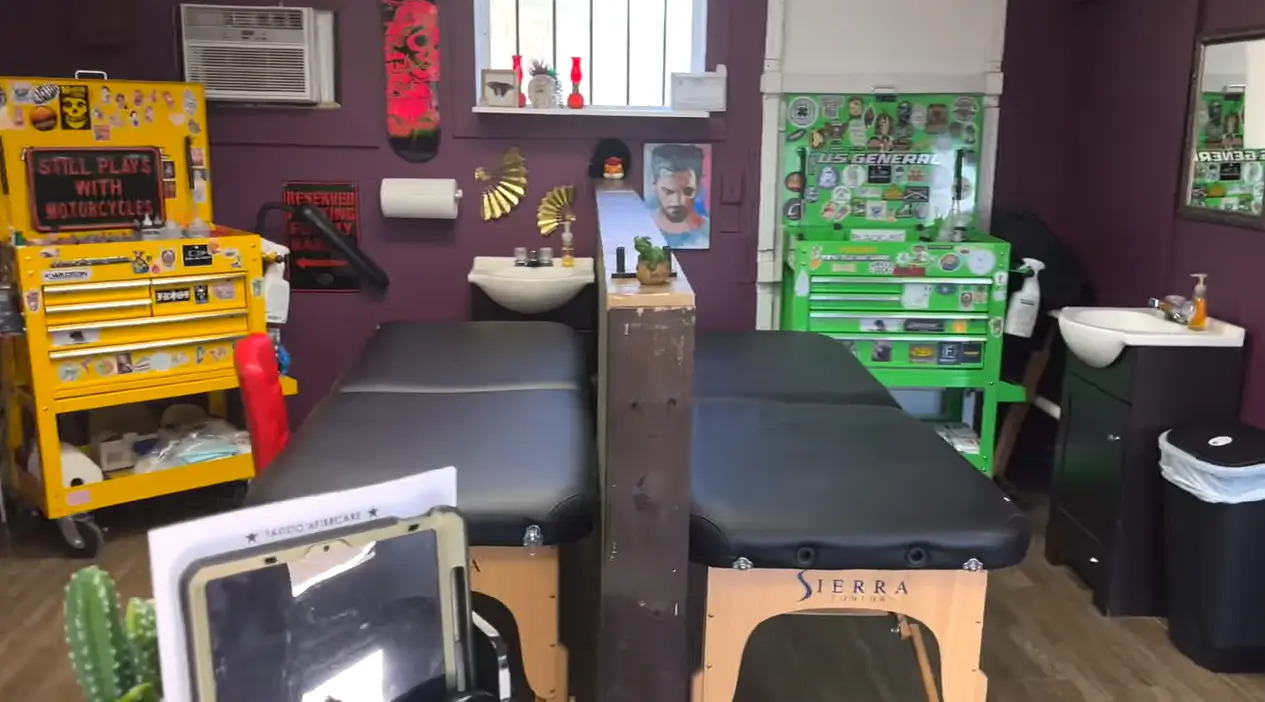
Your location is the key to your success.
Deciding where to put your tattoo parlor will depend on a combination of these two factors:
You can save a lot of money if the location you choose is already suited to becoming a tattoo shop. For example, a space that was previously a dental practice or another tattoo shop will be easier to use because much of it will already be up to code.
Additionally, looking for a place that already has wood or tile floors saves you money because your shop needs non-porous floors to be approved by your state health department.
You need to set up shop in an area that is busy enough to support your business. You don’t have to move into a major city (in fact that could leave you with too much competition, lowering your income). But before you settle on a place, pay attention to its:
Knowing the answers to these questions is important so you can estimate how many customers you’ll get in a specific location...and if that amount of customers will let you be a profitable business.
Note
Foot traffic is a major consideration for small business owners. Setting up shop in a popular area with a lot of foot traffic will mean higher rent costs. However, you will not need to invest as much in marketing because you’re easily seen.

Get Licensed, Inspected, and Insured: Be Legally Allowed to Tattoo
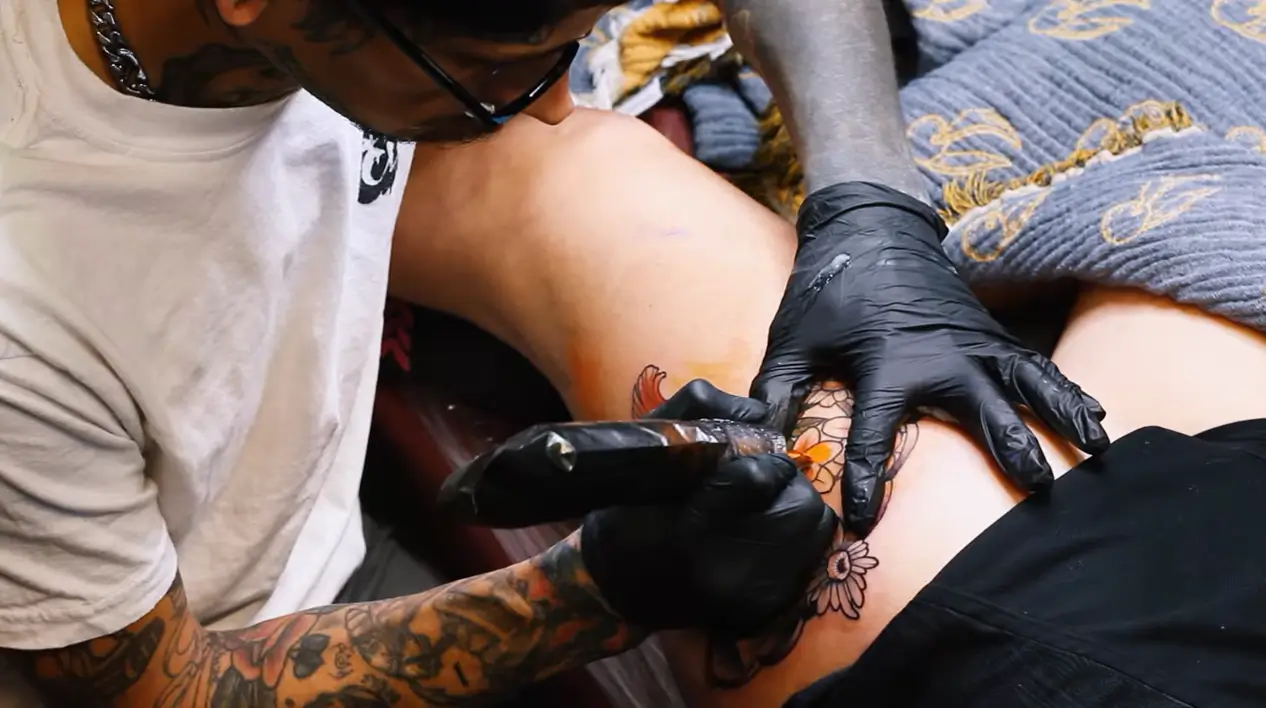
Every state has different laws, and each individual county will have their own set of regulations. What you can count on, however, is an inspection. A representative of your state’s health department will come to inspect your new shop and make sure it is up to code. You will not be able to legally operate without receiving this license (sometimes called a permit).
Certificate of Occupancy
This is required for every business. It confirms that your space is up to par on all building codes, zoning laws, and government regulations. If you’re leasing a location, your landlord should get this for you (make sure they agree that it is possible before leasing). If you buy or build, it is your responsibility.
In most states, a shop license costs between $400-$1000, and must be renewed yearly.
For your individual artists, whether they need to have their own license, a permit, or must be registered with the state will depend on where you live. Many states simply require the shop to have a business license and a tattoo license, and the artists to register under your shop. (In this case, artists are usually only required to have Blood-borne Pathogens and CPR certifications.)
Not sure if your artists need to be licensed? Learn more about individual tattoo artist licenses in every state here.
Waiver, Release and Consent to Tattoo
Another important legal protection is your waiver, release, and consent to tattoo. This will be given to each tattoo client to initial and sign before they get their tattoo. It basically says that the client won’t sue you if they’re allergic to the ink or the tattoo gets messed up, and that they’re sober and want to get a tattoo, etc.
You can find a good sample here. Some states will have their own version you have to use in your shop. If you build your own, this is probably something you want a lawyer to look at. (This is also a good time to prepare your aftercare recommendations sheet to give to clients!)
You should provide both oral and written instructions for clients when it comes to aftercare. Many tattoo artists will review these guidelines at both the beginning and the end of the tattoo appointment.You will be required to keep these consent waivers and other client information on record. In most states, you have to keep these records for at least two years. To cut down on the cost of paper and ink, take up less space, and keep client information safe, it’s a good idea to take your paperwork digital. Paperless waiver companies like WaiverForever can help you more easily manage client records.
You will need to get Business Property Insurance to protect your tattoo shop financially in case there is a major accident or loss. Additionally, you will need General Liability (including Public Liability) Insurance (about $500-$700 annually for $1 million in general liability coverage) as well as Professional Liability Insurance (including indemnity).
Your state will probably require Workers’ Compensation Insurance as well.
Fill the Shop with Customers with an Opening Flash Day
Having a huge opening event makes a splash in the market and puts you on the map. Doing simple flash designs for a fixed, discounted price lets you get a lot of new customers - and possible long-term clients - in and out the door in a single day and introduce yourself to the community.
Giving some of the proceeds to charity can help pick up press as well. Additionally, it’ll encourage more clients to come visit since they’ll also be giving to a cause they care about.
Get a Business Plan for Your Own Shop Inside the 2-Week Studio Course

Almost every tattoo artist dreams of opening their own successful tattoo studio…but most never do. That’s usually because it feels like opening a shop takes too much money or too much time.
But it doesn’t have to. Inside the 2-Week Studio Course, our Professional Tattoo Artist Instructor, Brandon, takes you along for the ride as he opens his third studio in 2 weeks for less than $5K so you can do it too:
Find a Good Studio Location on a Budget
Zoning regulations, realtors, and local competition can make finding a studio location overwhelming. We’ll show you how to find the hidden gems so you can start your shop in a location that’s surrounded by customers without paying a fortune.
Skip the Frustrating Legal Research
Opening a shop usually requires weeks of difficult research and searching through legal codes. Instead, just get step-by-step instructions on how to handle:
Part of opening a successful tattoo shop is getting customers through the door. We’ll explain the best way to make $1K your first day and get your artists booked out so you can make a return on your investment fast.
Get our easy-to-follow social media templates and customer forms that show clients they can trust you as a professional:
Ready to get the roadmap to opening your own tattoo studio?
Click here to join Tattooing 101’s 2-Week Studio Course.