

Being able to get good saturation in your tattoos is important because being able to use good color packing technique and create solid black fills will make sure your designs never look “patchy” or faded.

If you wipe excess ink off your fake skin only to find that your shading looks patchy, keep reading. We’ll be breaking down:
How to Tattoo Solid Fills
Getting a solid fill is important to almost every style of tattoo, particularly tribal and American traditional.
Move the Needle in Tight Circles
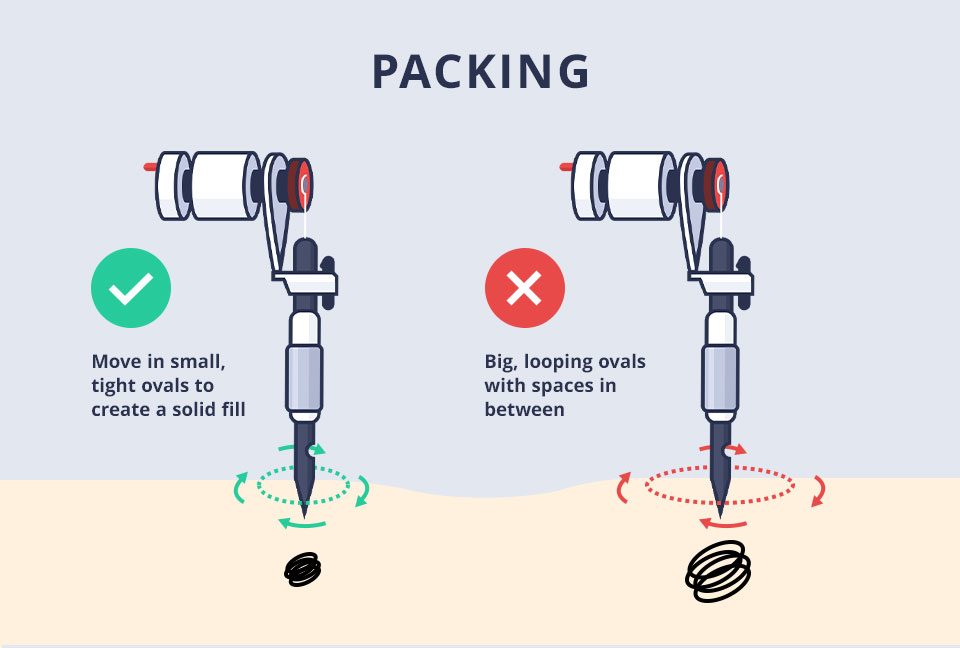
One of the best things to practice when it comes to getting a solid fill is moving the needle in small, tight ovals. We recommend using mag needles for packing in ink. However, if you aren’t comfortable with using a mag in small areas yet, you can repeat this motion using a round shader instead.
Pro Tip:
Angle your mag needle while packing to make sure the barbs don’t line up and slice across the skin all at once.
Note:
You can practice this motion on a page of printer paper before moving onto skin. Muscle memory is essential for this technique.
Shade Right Up to Your Linework
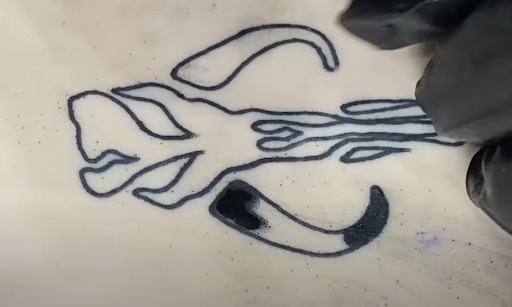
A lot of new artists will find that there’s a small gap between their shading and their linework. This is because there is a small gap between where the end of the cartridge casing is and the needles inside.
So, while it might look like they’re shading all the way up to the line because the cartridge is up to the line, they actually need to go a little further so the needles reach the linework.
One way to make it easier to shade up to your linework is to tattoo thicker lines. We recommend using a 14 round liner to get thick lines.Use Standard Needles
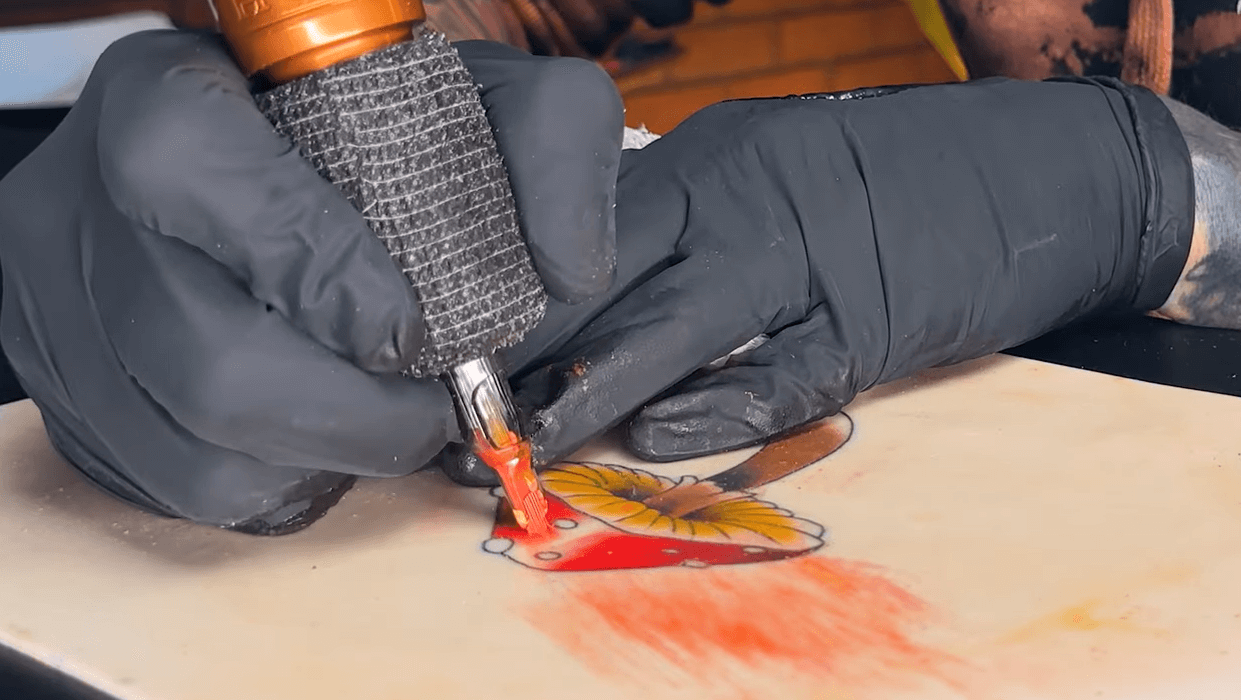
It’s best to pack ink with a standard, 12-gauge mag. You don’t want to use 10-gauge bugpins because they’re smaller, and they won’t saturate as much space.
Use Only One Pass
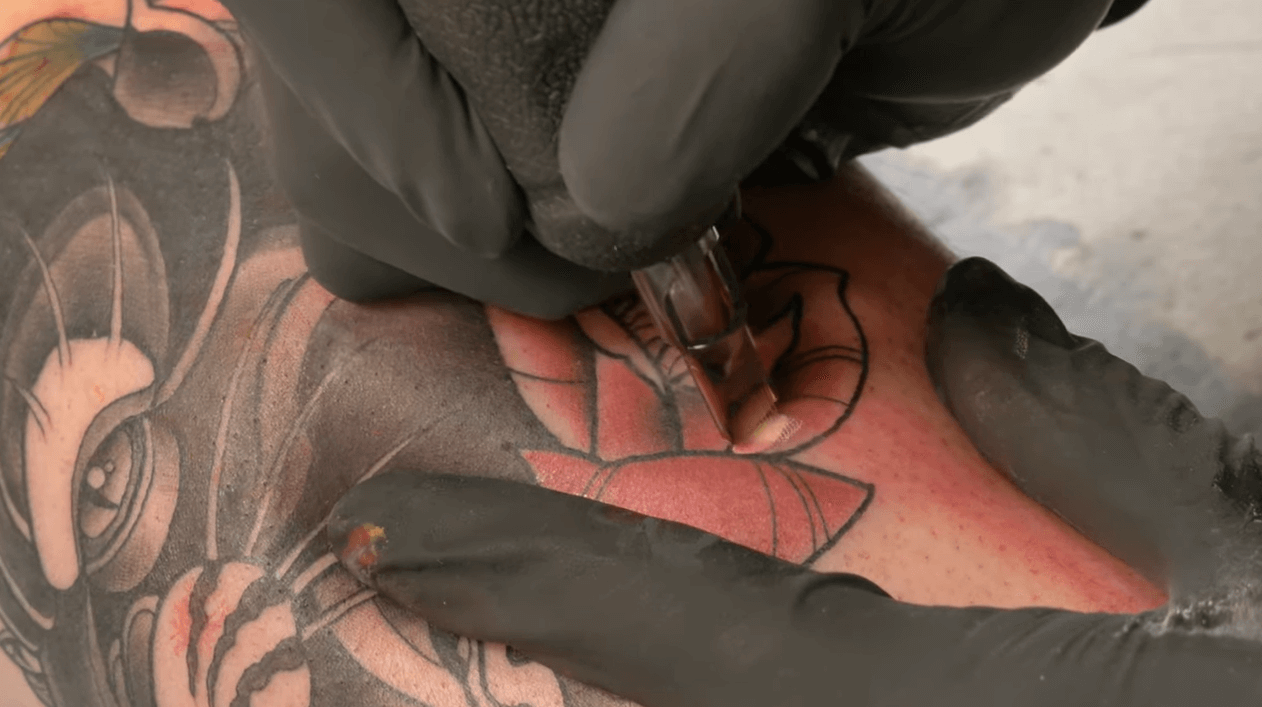
You want to get to a point where you can completely saturate an area in one pass. If you need to go back over an area multiple times, it will overwork the skin and can impact the quality of the tattoo.
On fake skin, this will look like little chunks of the silicone are missing. On human skin, this can lead to scarring, blowouts, (this will look like ink spreading beneath the skin), and other issues with healing.Pro Tip:
If your hand speed is too fast, you won’t be able to get full saturation in one pass. This will make it impossible for your color packing to look “smooth.” However, if your hand speed is too slow, then you can accidentally overwork the skin.
How to Get into Small Areas with a Mag Needle
While you can use a round shader to get into tight areas, we recommend also learning how to do it with a mag.
You will need to hang out your needle a little bit more so you can “float the needle” and see exactly where your needles are. (You won’t be going any deeper into the skin.)How to Practice Getting Saturated Fills
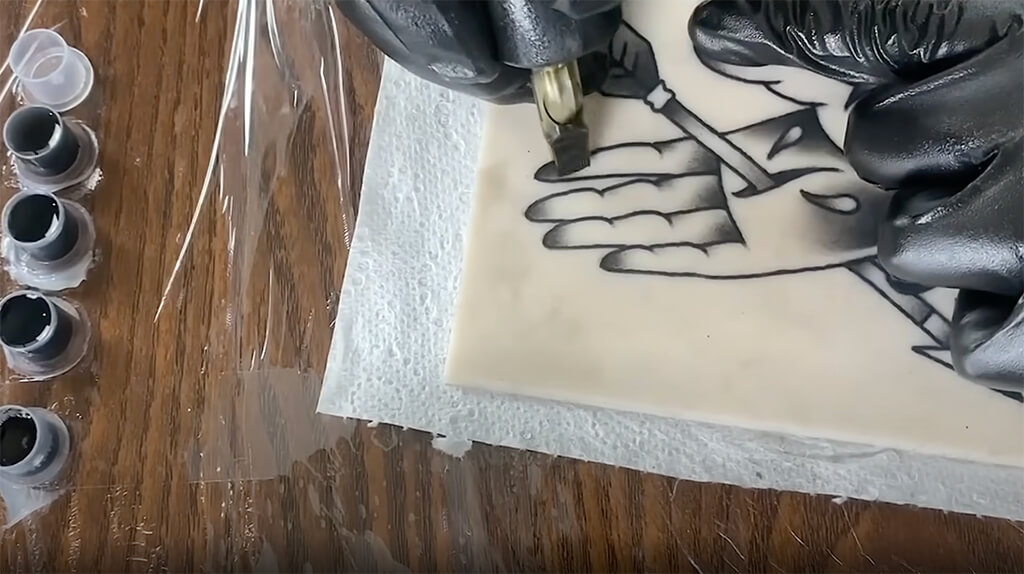
When it comes to practicing your solid fills, we recommend the following:
Some Ink is Created For Creating Solid Fills
Some tattoo supply companies make ink specifically for packing ink that will spread out in the skin as the tattoo heals. This helps fill in any tiny areas that weren’t covered during the tattoo (these are called “holidays”) to give you the best results.
This is mainly available for black ink to assist with shading and ensure you’re getting that dark contrast you need to make sure a tattoo looks good long term. If you’re looking for more options in your ink setup, Dynamic Ink is a good place to look for something like this.
Learn to Tattoo Without an Apprenticeship
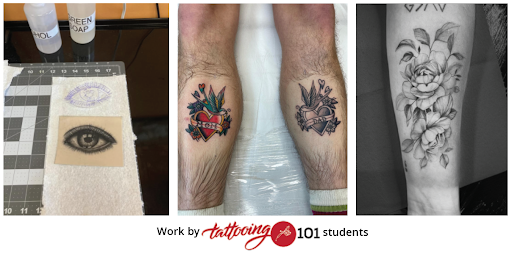
In the past, learning in the shop through an apprenticeship was the only way aspiring artists could learn to create solid fills in their tattoos. Today, however, artists are skipping the apprenticeship to learn on their own time at home with the Artist Accelerator Program.
The world’s oldest and largest online tattoo course, the Artist Accelerator Program’s easy-to-follow, 9-step framework lets anyone go from complete beginner to professional tattoo artist without the year of grunt work or hazing.
Inside the program, you’ll be taught everything you’d learn in a traditional apprenticeship by professional tattoo artists and receive feedback on your art and tattoos in the program’s private online Mastermind community.
Over 2500 students have used the Artist Accelerator Program’s 9-step framework to break into the tattoo industry, with many opening their own studios or working in shops around the world.
If you’d like to see the framework they used, click here to learn more about the Artist Accelerator Program.